As we step into 2025, the real estate market continues to evolve, shaped by shifting mortgage rates, regional trends, and broader economic factors. This report provides a comprehensive overview of key market dynamics, from rising home prices to changes in supply and demand. Despite a rebound in new listings, inventory remains below pre-pandemic levels, influencing buyer behavior and pricing trends. Additionally, population migration patterns and affordability concerns have further cemented the South as a dominant force in the housing market. In this post, we’ll break down the major takeaways from the report and what they mean for buyers, sellers, and investors in the months ahead.
“Home sales in the final months of the year showed solid recovery despite elevated mortgage rates. Home sales during the winter are typically softer than the spring and summer, but momentum is rising with sales climbing year-over-year for three straight months…Job and wage gains, along with increased inventory, are positively impacting the market.” – NAR chief economist Lawrence Yun, 1/24/25
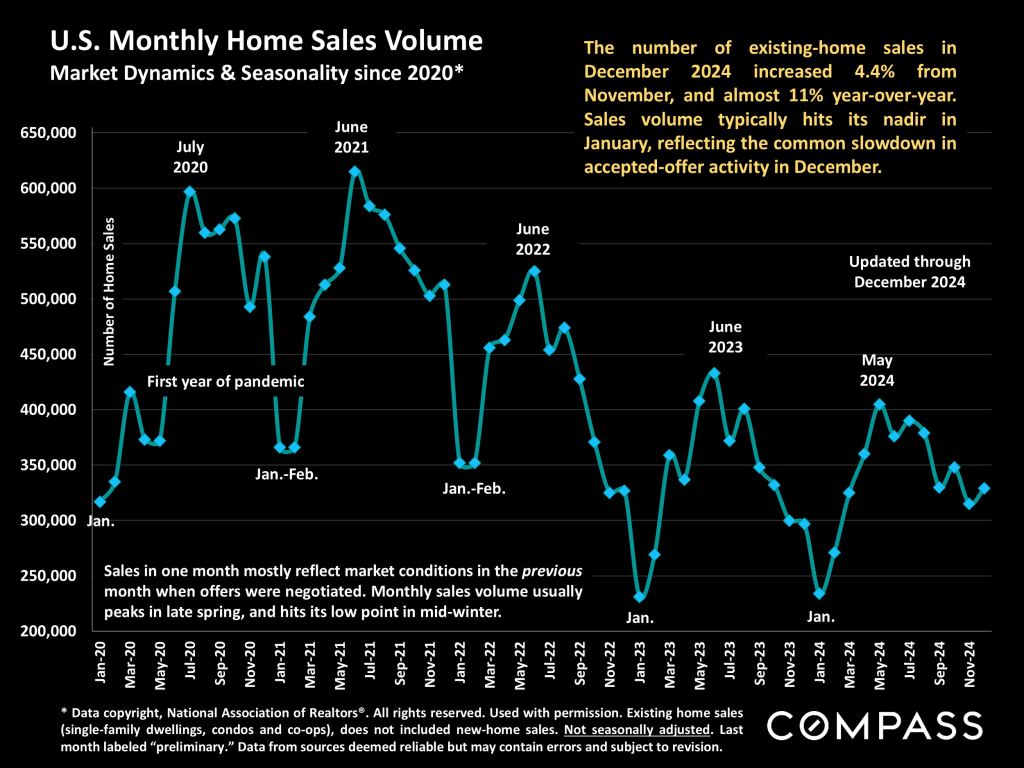
- National existing-home sales in December 2024 rose 4.4% from November and almost 11% from December 2023, a strong finish to the year, but comparing 2024 to 2023, annual sales volume was slightly down. Monthly median house and condo/co-op sales prices were up 6.1% and 4.5% respectively, and for the full year, 2024 median sales prices rose 4.6% and 3.7% over 2023.
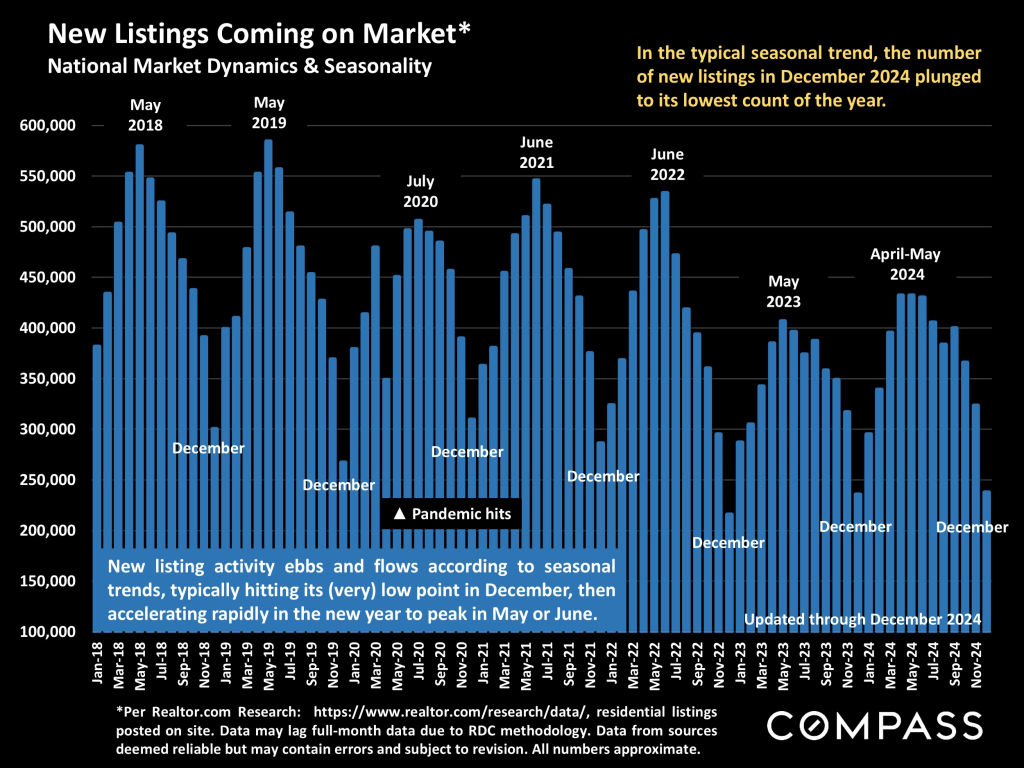
- In the typical seasonal trend, the number of new listings coming on market and the number of homes going into contract in December hit their lowest monthly counts of the year, though closed sales – mostly reflecting accepted-offer activity in November – rose as noted in the paragraph above. Listing and sales activity can be expected to accelerate rapidly in coming months, with the market heating up moving into the spring selling season.
- 53% of December home sales sold in less than 1 month; 16% of sales closed for over asking price.
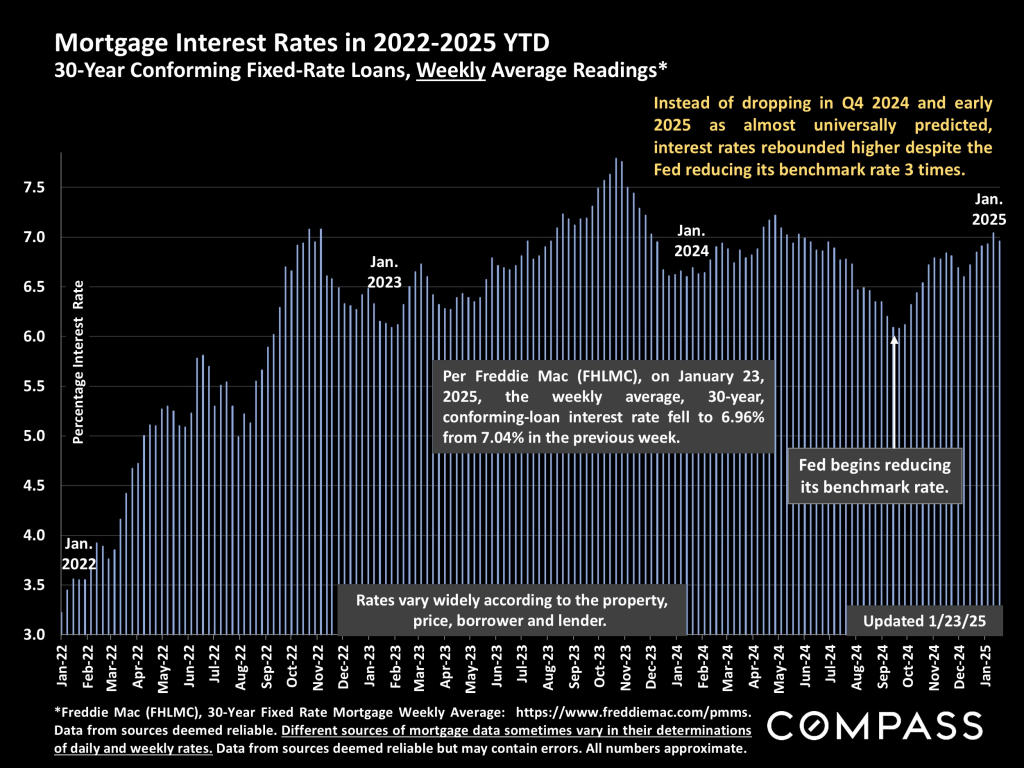
- The weekly average mortgage interest rate briefly rose above 7% in mid-January, before subsequently falling slightly below that threshold.
In its forecast for 2025, the National Association of Realtors estimated that existing (resale) home sales will rise 7% to 12% over 2024, new-construction home sales will increase 11%, the median home sales price will climb 2%, and the mortgage interest rate will average around 6%.
After significantly declining in the 2nd and 3rd quarters of 2024, the average mortgage interest rate bounced back up in the last 4 months.
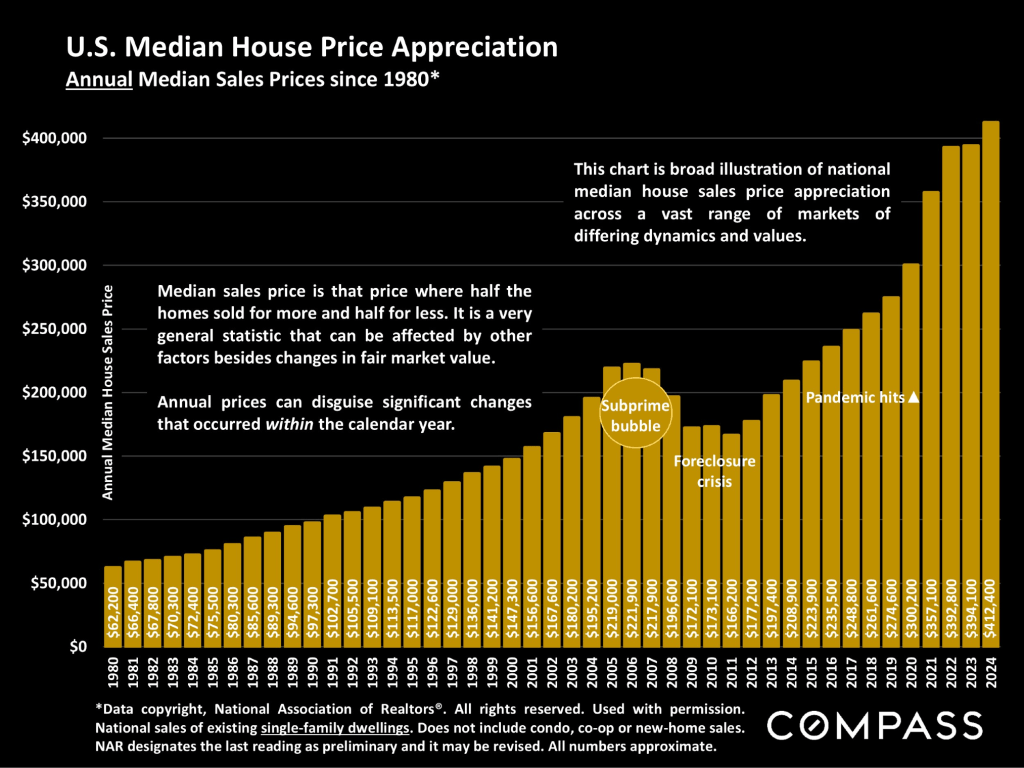
This chart illustrates annual, median, existing-house sales prices, but annual condo/co-op prices also increased. Note that median sales prices can be affected by other factors besides changes in fair market value. For example, if affluent buyers increase their percentage share of homes purchased, as they did in 2024, that will help pull median prices up simply because they buy more expensive homes.
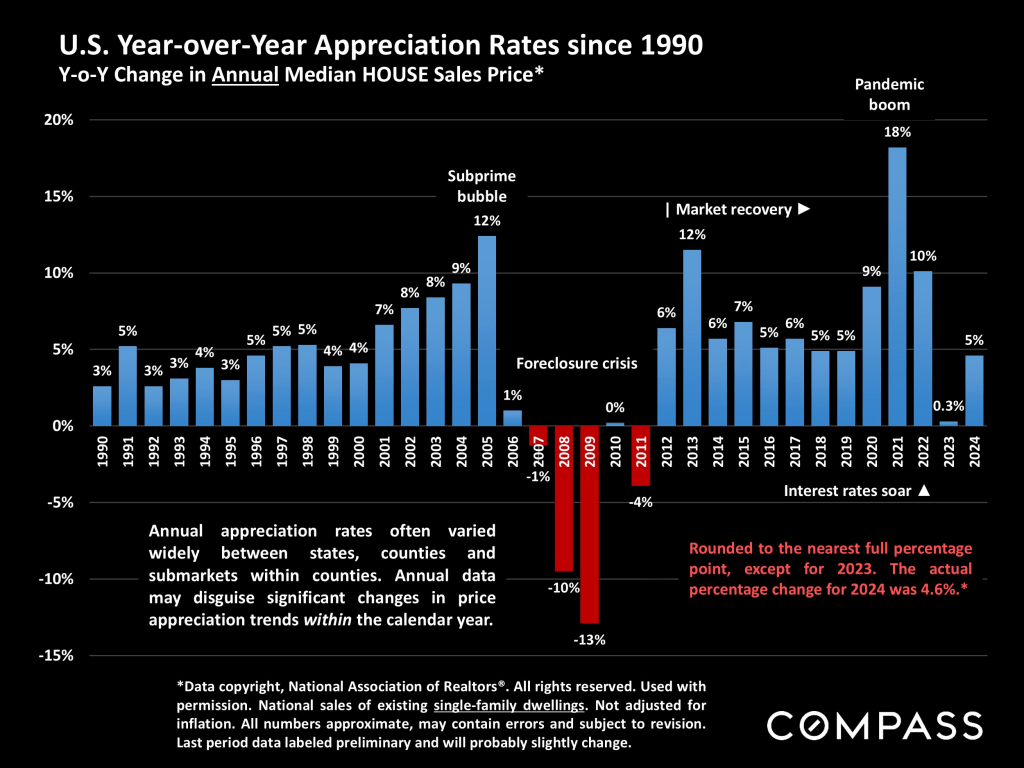
A review of approximate, year-over-year, house-price appreciation rates.
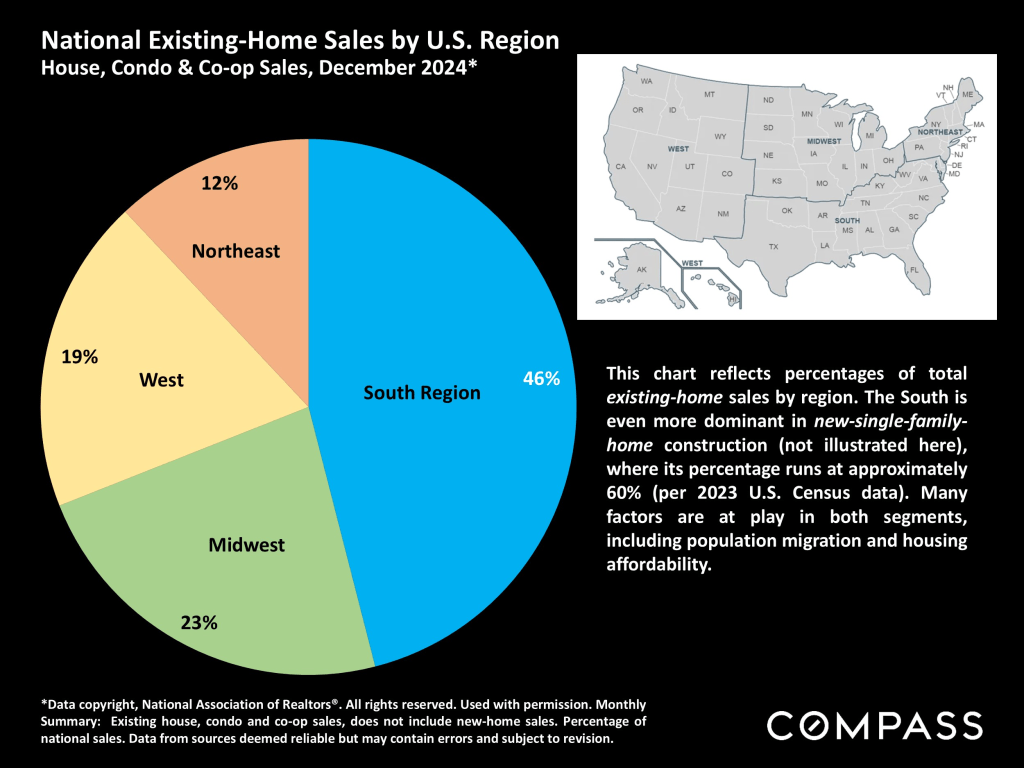
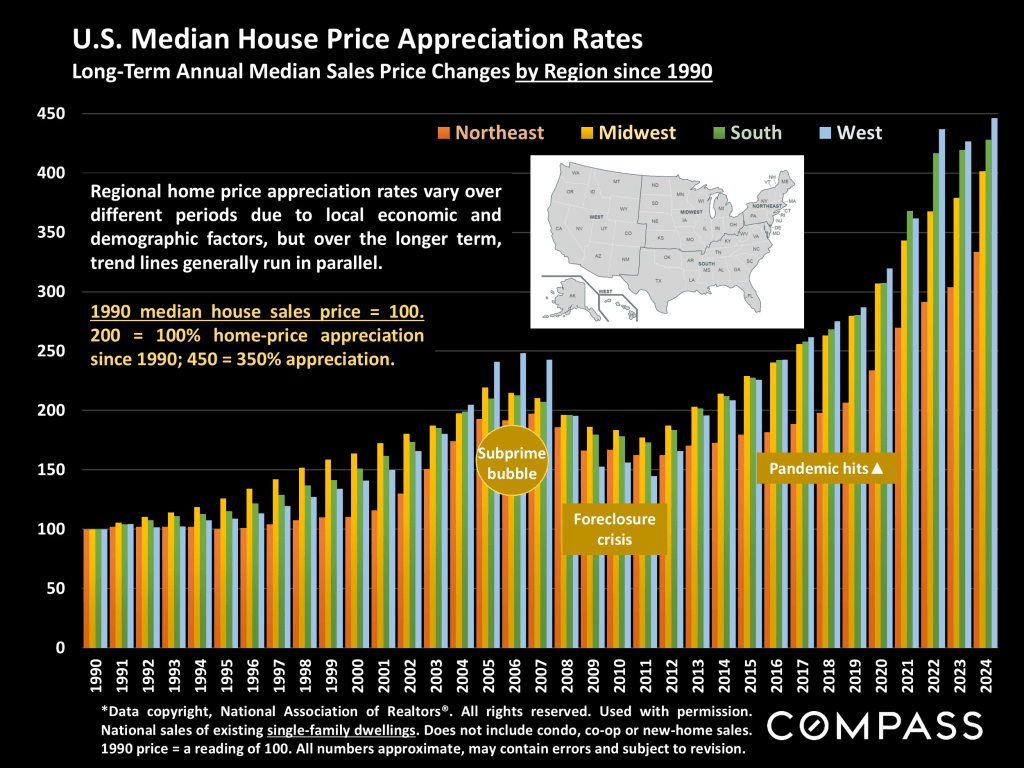
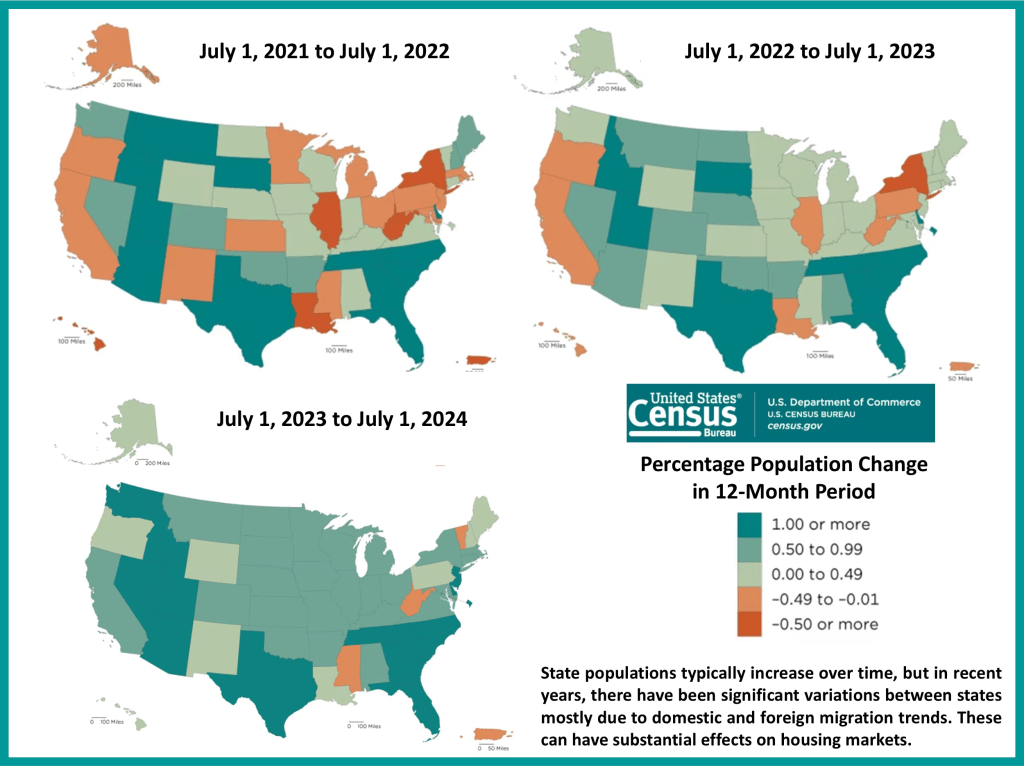
Due to trends in population migration, new-home construction, and housing affordability, the southern region of the country has been dominating home sales in recent years.
Illustrating regional home-price appreciation rates since 1990: Over the shorter term, annual appreciation changes can vary significantly between regions, but over the longer term, regional rates generally move roughly in parallel, affected by the same major macroeconomic conditions.
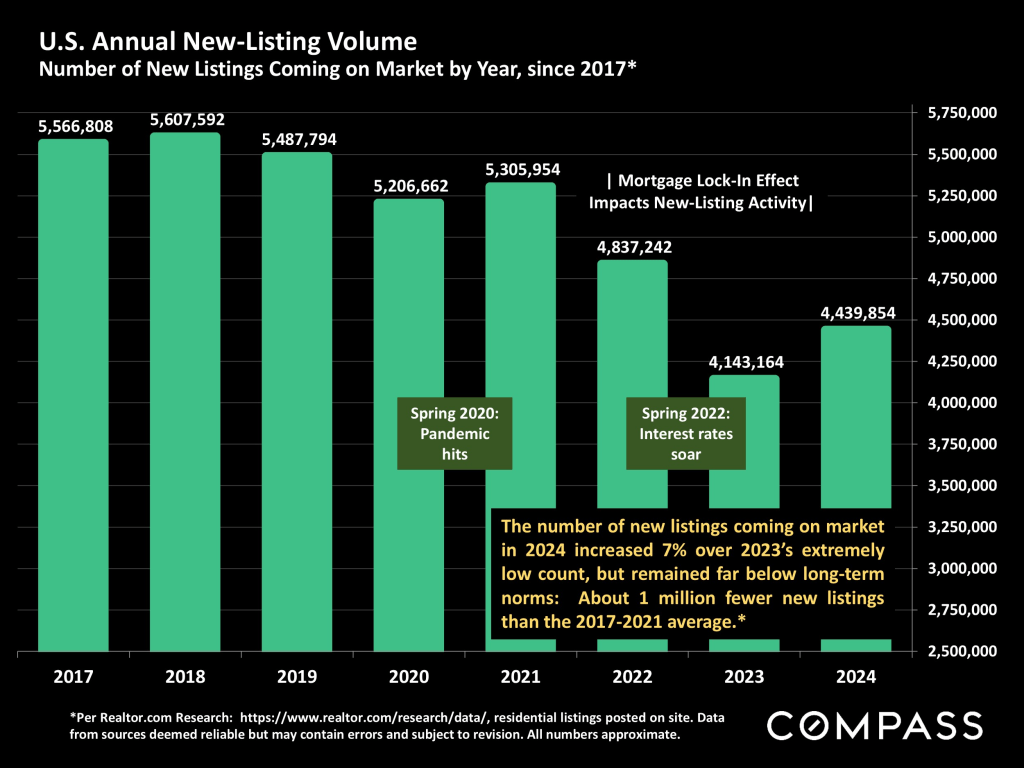
2024 saw a significant rebound from 2023 in the number of new listings, but the count remained far down from long-term standards – with considerable impact on supply and demand dynamics. Many would-be sellers are still holding off, reluctant to trade a low interest rate loan for a much higher rate on a new home. Of course, this does not apply to the increasing percentage of buyers who pay all-cash, and high levels of home equity and soaring stock markets are big factors in this trend.
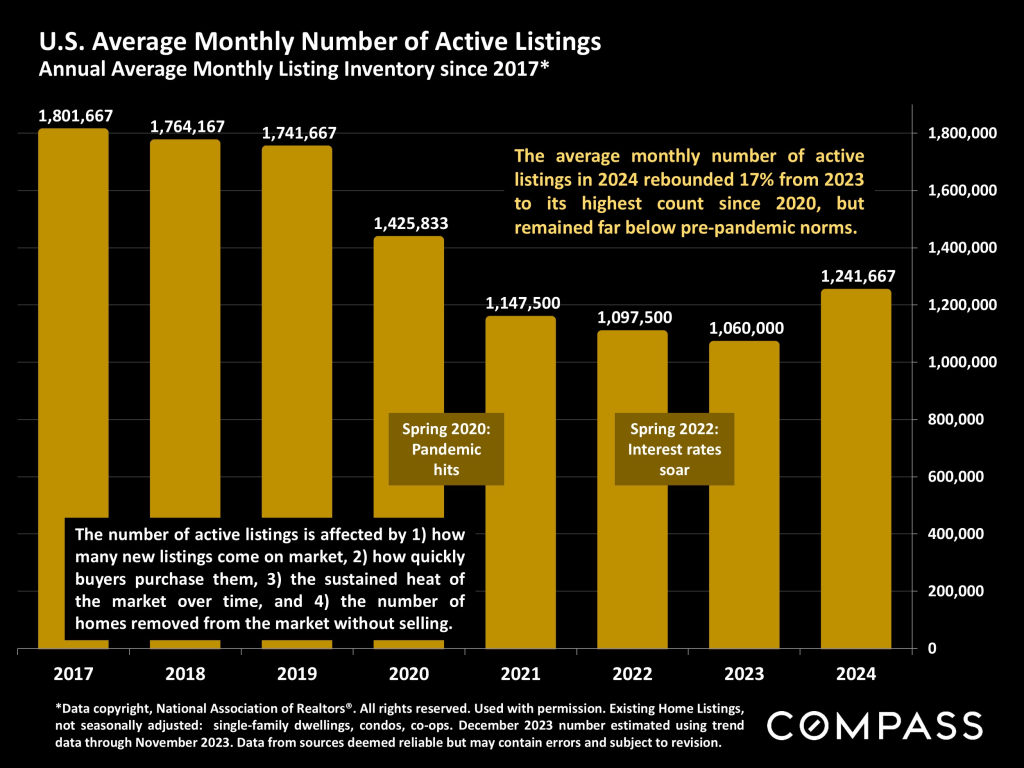
The monthly, average number of homes for sale rose substantially in 2024 to its highest point in 4 years, but didn’t compare with norms before the pandemic hit.
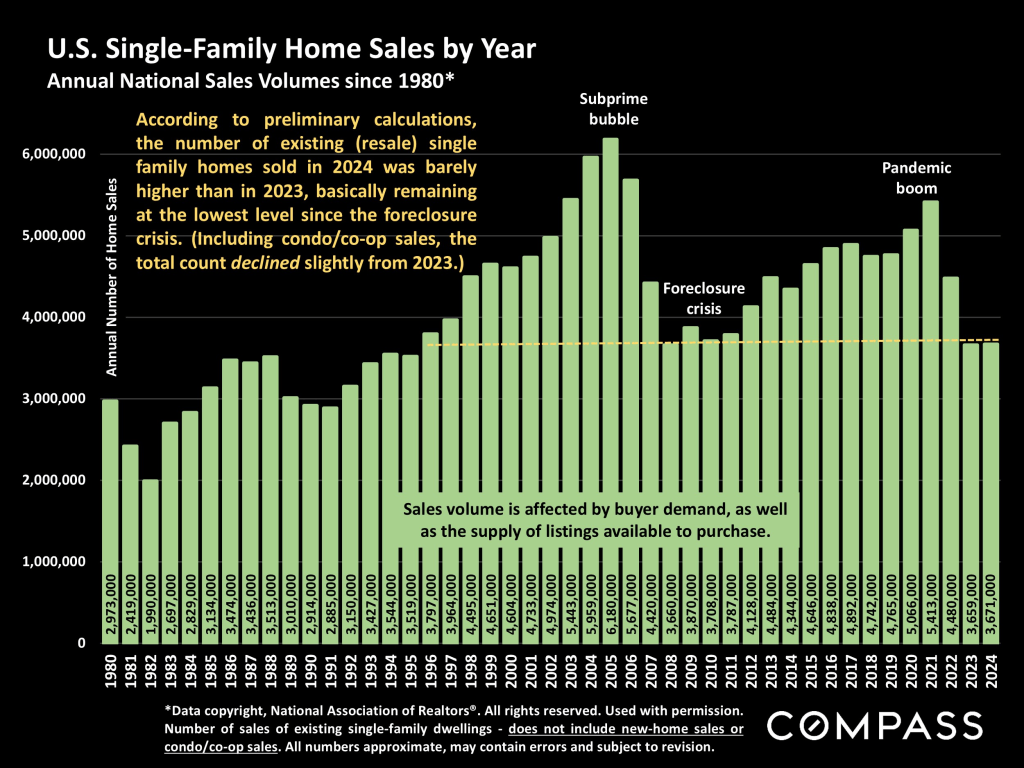
Impacted by a number of factors, total sales volume remained very low in 2024. Sales did not keep pace with the increase in listings, creating a cooling effect on national market conditions, though median sales prices still rose. (How any of these national trends apply to specific markets and market segments can vary widely.)
The next 2 charts illustrate the enormous effect of seasonality on supply and demand: The first chart below shows the ups and downs in the monthly number of homes put on the market. Hitting its nadir in December, it will now typically climb quickly to peak in late spring or early summer.
Seaonality in demand: Monthly sales volumes closely follow new-listing activity. Note that some markets see different trends: For example, in big second-home markets, sales can peak during vacation months.
A review of U.S. Census population-change maps over the past 3 years: In the last 12-month period measured, all but a few states saw population increases, including those which had seen significant previous declines (orange/brown) – their recent increases being mostly due to foreign immigration – but the highest growth states (dark green) generally remained the same since 2021.
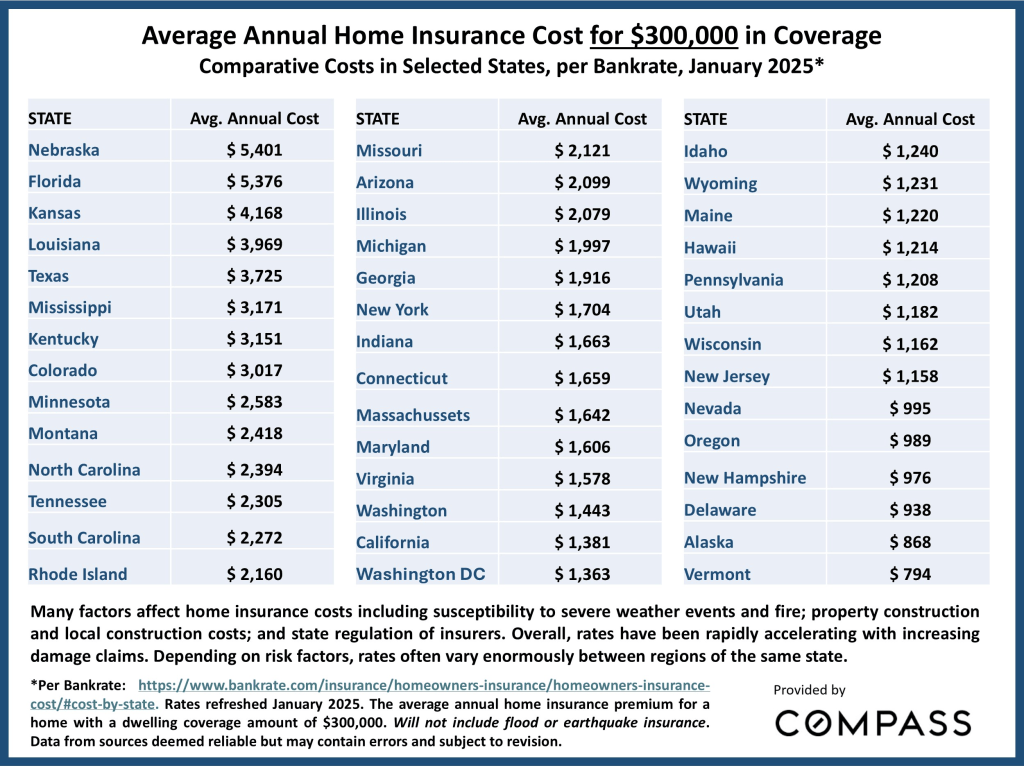
The crisis in homeowner’s insurance availability and cost has been widely reported. Unfortunately, 2024 was a bad year for natural disasters, and 2025 has had a sad, terrible beginning. This table reviews approximate insurance costs across a selection of states – costs very much in flux – and lists some of the factors at play.
Final Thoughts
The real estate landscape in 2025 is proving to be a dynamic and complex environment, shaped by evolving market forces and economic conditions. While rising home prices and shifting migration patterns continue to define regional trends, factors such as mortgage rates, inventory levels, and affordability challenges remain key influences on buyer and seller behavior. As we navigate the months ahead, staying informed and adaptable will be crucial for making strategic real estate decisions. Whether you’re looking to buy, sell, or invest, understanding these market insights can help you position yourself for success in an ever-changing housing market.
 Where Real Estate, Technology, & Culture Converge in NYC
Leave a comment